
-81038.webp)
MEDICAL SPA
Medical Spa
IPL Treatment
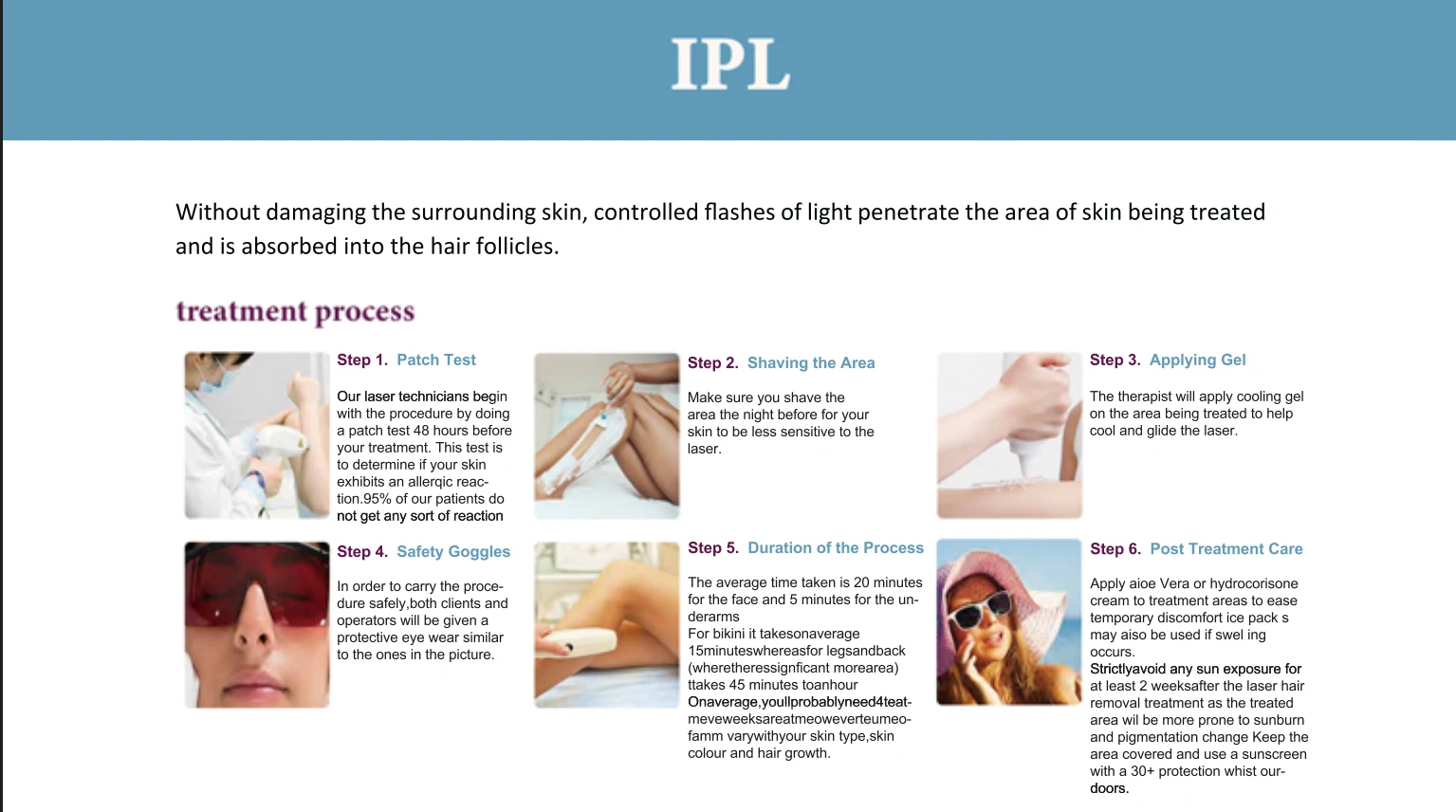
Without damaging the surrounding skin, controlled flashes of light penetrate the area of skin being treated and is absorbed into the hair follicles.
Treatment process
Step 1. Patch Test
Our laser technicians begin with the procedure by doing a patch test 48 hours before your treatment. This test is to determine if your skin exhibits an allergic reac-tion.95% of our patients do not get any sort of reaction
Step 2. Shaving the Area
Make sure you shave the area the night before for your skin to be less sensitive to the laser.
Step 3. Applying Gel
The therapist will apply cooling gel on the area being treated to help cool and glide the laser.
Step 4. Safety Goggles
In order to carry the proce-dure safely,both clients and operators will be given a protective eye wear similar to the ones in the picture.
Step 5. Duration of the Process
The average time taken is 20 minutes for the face and 5 minutes for the un-derarms
For bikini it takesonaverage 15minuteswhereasfor legsandback. (wheretheressignficant morearea) ttakes 45 minutes toanhour Onaverage, youllprobablyneed4teat-meveweeksareatmeoweverteumeo-famm varywithyour skin type, skin colour and hair growth.
Step 6. Post Treatment Care
Apply aloe Vera or hydrocorisone cream to treatment areas to ease temporary discomfort ice pack s may aiso be used if swel ing occurs.
Strictlyavoid any sun exposure for at least 2 weeksafter the laser hair removal treatment as the treated area wil be more prone to sunburn and pigmentation change Keep the area covered and use a sunscreen with a 30+ protection whist our-doors.
HIFUTherapy
How is HIFUTherapy Different from Laser Procedures?
HIFUTherapy uses sound energy and tried and true ultrasound, which has unique properties that allow it to bypass the surface of the skin to treat depths not matched by any other non-invasive cosmetic device. HIFUTherapy stimulates collagen production in the skin's foundation, resulting in a clinically significant lift of tissue over the following 2-3 months. Lasers rely on light energy, which cannot reach deeper skin layers at an optimal temperature, so laser treatments typically only treat superficial skin. Since the two technologies often treat different types of skin issues, they're actually very compatible.
Can Utherapy Replace a Face Lift Procedure
HIFUTherapy treats the deep foundational layer addressed in cosmetic surgery, but won't duplicate the results of a facelift. However, it is a great alternative, especially for those not ready for surgery or for patients looking to extend the effects of cosmetic surgery.
How Does HIFUTherapy Stimulate Collagen Production
During the treatment, the transducer delivers and deposits focused ultrasound energy deep beneath the skin at the optimal temperature for collagen regeneration. The treatment jumpstarts a natural process, known as neocollagenesis, to produce fresh, new collagen The treatment itself doesn't involve any creams, fillers or toxins, it just relies on your body's own collagen-building process for natural, noticeable results.
How Long Will a HIFUTherapy Treatment Take
The length of the treatment will depend on the area being treated and your individual treatment plan. A face and neck procedure typically takes 60-90 minutes, while a chest treatment on its own takes approximately 30 minutes.
Slim cartridges help widen the range of application methods for easier treatment and operations.
Will I Need to Take Time off Work?
With a single HIFUTherapy treatment, there is no downtime. After your procedure, you can resume your normal activities immediately, with- out having to follow any special post-treatment measures. We have even had clients come up to the clinic on their lunchbreak to have the treatment, no creams required and your general skin care plan and make-up can be applied as normal.
What Does HIFUTherapy Feel Like?
As the ultrasound energy is delivered, you will feel tiny amounts of energy being deposited to precise depths, indicating that the colla- gen-building process has been initiated. Comfort levels vary from person to person, but the sensation only lasts while the ultrasound energy is being delivered.
How Many HIFU Treatments Will I Need?
Most clients only need one treatment. However this may be based on the degree of skin laxity, the biological response to ultrasound energy, and the individual's collagen-building process, some clients may benefit from additional treatments. Because skin continues to age, future touch-up treatments can help clients keep pace with the body's natural aging process.
Who is a Good Candidate for HIFU?
A good HIFU candidate has mild to moderate skin laxity where the skin begins to feel and look less firm. Examples include a lowered eyebrow line, loose skin on the neck, sagging under the chin, and lines or wrinkles on the chest. Of course, the best way to find out if you're a suitable candidate is to consult with a practitioner.
IS HIFU Safe?
The HIFU procedure has been used safely in over 250,000 treatments worldwide. Ultrasound energy itself has been used safely in the medical field for more than 50 years.
How Long Does it Take to See Results and How Long Do They Last?
After your HIFU Treatment, you may see some initial effects, The best treatment result will be shown after treatment 2-3 months, and the treatment result can last about 2 to 3 years.
Would Healing Process
• Inflammation Phase 0 - 48 Hours
• Proliferative Phase 2 Days - 6 Weeks
• Remodeling Phase 3 Weeks - 1 Month
What Is High-Intensity Focused Ultrasound (HIFUTherapy)?
HIFUTherapy is a safe, non-surgical ultrasound treatment that counteracts the effects of time and gravity on your skin. The treatment uses the body's own regenerative response to gently and gradually lift skin on the eyebrow, under the chin, and on the neck, and smooth lines and wrinkles on the décolletage.
Are There Any Side Effects?
The skin might appear flushed at first, this can be during treatment but sometimes lasts longer, the redness should however disappear within a few hours. Some clients experience slight swelling, tingling or tenderness to the touch, but these are temporary in nature. Other less common post-procedural effects may include temporary bruising or numbness in small areas of skin. Ás with any cosmetic procedure there is the possibility of other rare effects which your practitioner will review with you.